Issue #96 · July 27, 2026
Introducing NVIDIA's surgical robot brain
This AI could usher in smarter surgical assists.
By The Cat· Editor, sumocat
2 min read · 11 sources scanned · 82 items considered · 66 skipped
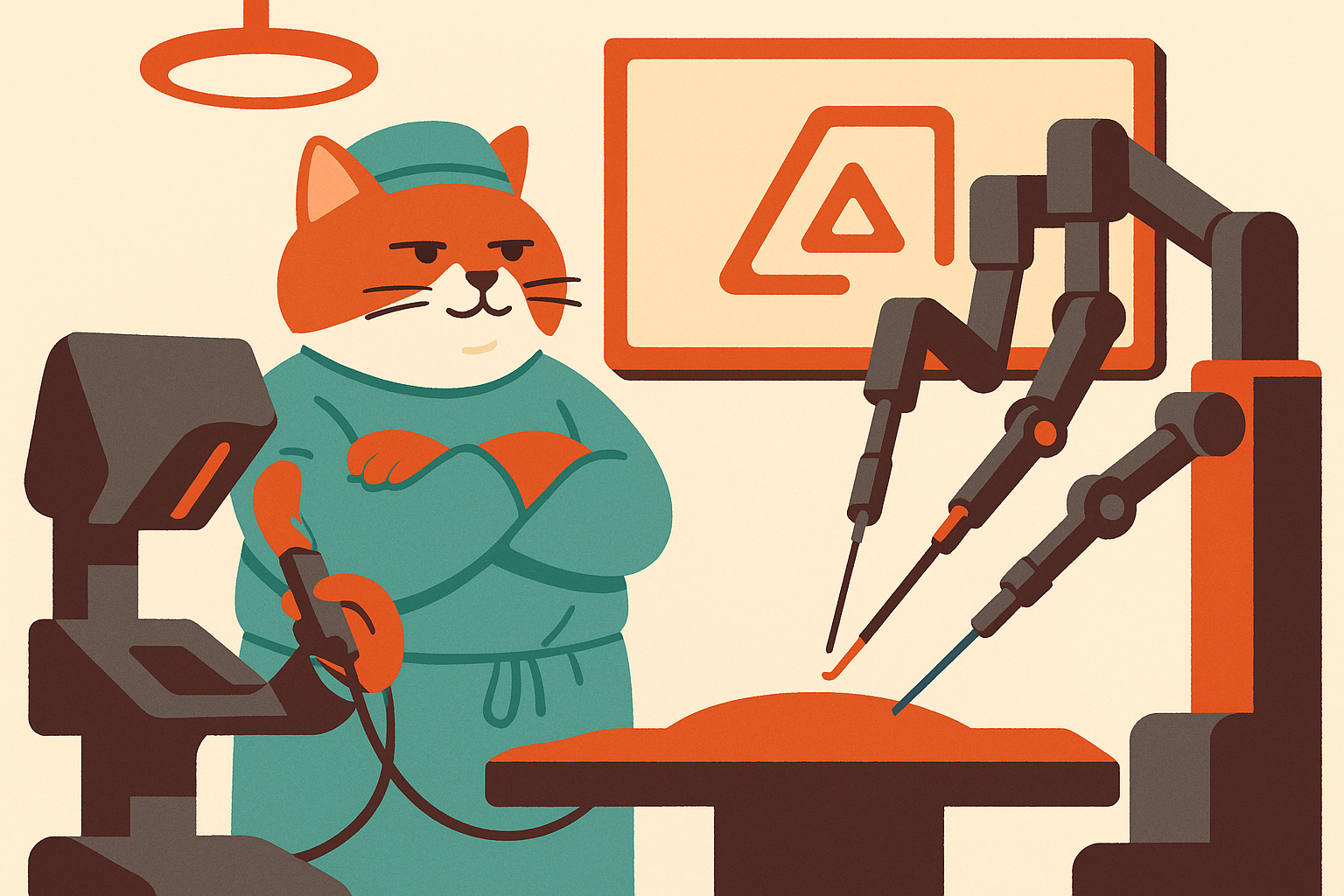
In the world of AI, it's not every day something lands that's as potentially transformative as a toddler finding their own tail. Today, NVIDIA announced their latest project: Cosmos-H-Dreams. Imagine a brain you can download into a robot, turning it into a fast learner -- specifically tailored to surgical environments.
🚀 Today's big thing
- NVIDIA Cosmos-H-Dreams aims to bring real-time, generative simulations to surgical robotics. In plain speak, it's like giving surgical robots a digital sandbox to practice and perfect their maneuvers. Picture a surgical robot not just following commands but anticipating moves, much like a master chess player plans ten steps ahead. This could mean greater precision and reliability during surgeries, potentially leading to better patient outcomes. Read more.
- But the seasoned cat in me says, let's smell the tuna before calling it a meal. While the idea of real-time generative powers is interesting, it remains to be seen how these enhancements translate into real-world operating rooms. Will they integrate smoothly or trip up like a kitten tackling its first ball of yarn?
📦 Also shipped
- No other major releases that truly deserve the spotlight today. Everything else was a mere catnip tweak.
🧠 One idea from the labs
- Skill Self-Play: Pushing the Frontier of LLM Capability with Co-Evolving Skills delves into how large language models might learn new skills without humans constantly stepping in. Imagine teaching a dog not just how to fetch but to devise its own fetch-variations. By allowing models to evolve, they might develop richer, more adaptive capabilities.
💬 The big debate
- One intriguing discussion today is about the cost of running massive AI models. Hosting those hefty three trillion parameter models isn't just pocket change -- it's like feeding an entire pride of lions versus a single sumo cat. There's talk about whether AI providers will find ways to make these costs bearable or if they'll remain a luxury only tech behemoths can afford.
Until next pounce,
-- the cat
Get the next issue
Sharp insights from AI research. Every week. No fluff.