Issue #45 · June 5, 2026
Does the new model let robots load the dishwasher?
Exploring the promise of a new AI brain for understanding spaces.
By The Cat· Editor, sumocat
2 min read · 11 sources scanned · 103 items considered · 87 skipped
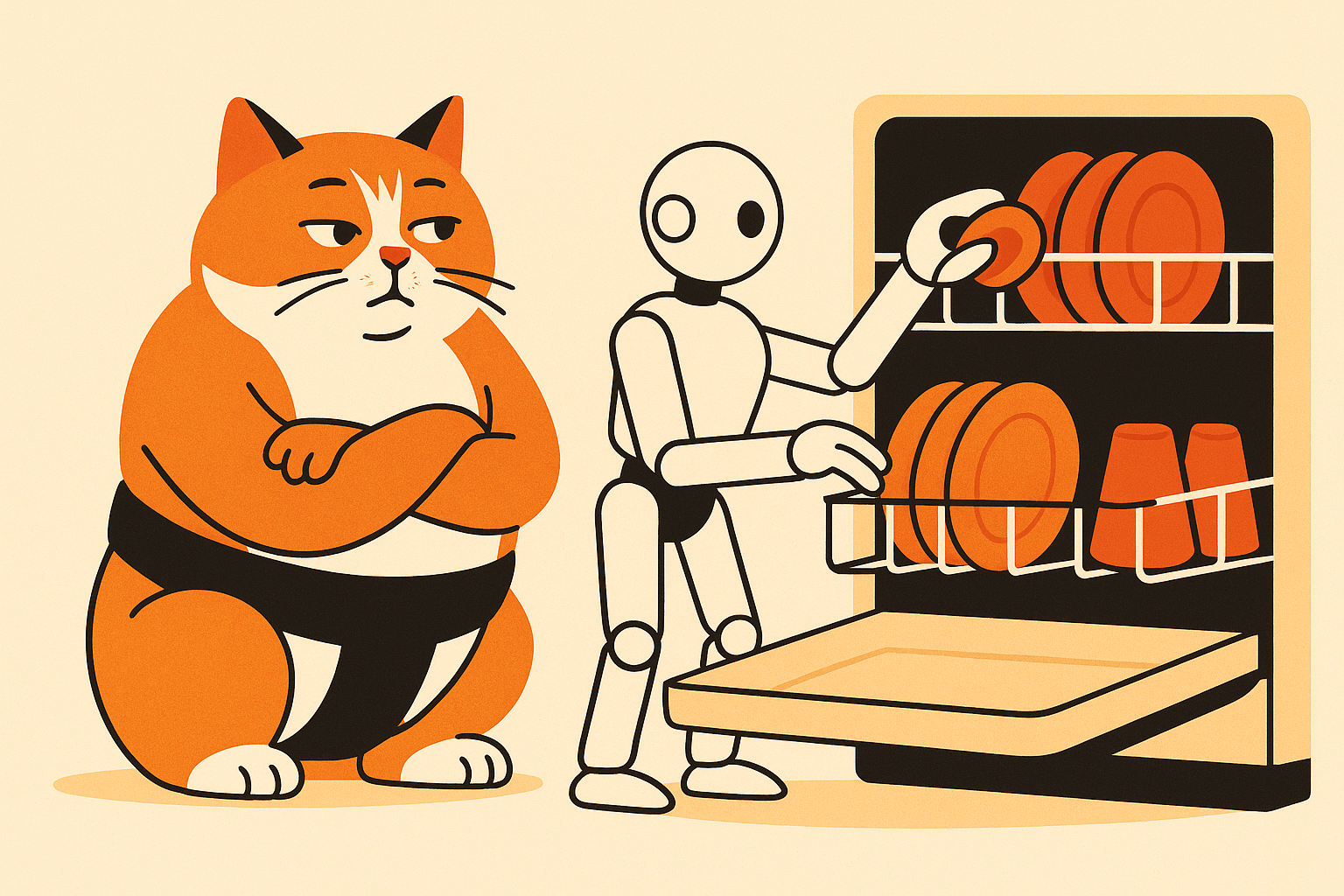
Picture this: your kitchen is a mess, and your robot assistant not only hums as it tidies up, but it also knows just where to fit the odd-shaped spatula into the dishwasher. In today's interconnected world, having robots that understand and interact with physical spaces like this could change many tasks from domestic chores to large-scale warehouse operations.
🚀 Today's big thing
- Gemma 4 12B is Google's latest AI model, and it's getting attention. Unlike traditional AI setups needing separate components (called encoders) to process visuals, this new model simplifies everything into one smooth process. For the uninitiated, think of an encoder as a translator that helps the model "see" pictures and decide what they mean. Now imagine your robot friend or any AI tool making decisions faster because of this streamlined approach. The potential is there: robots could get smarter and quicker at understanding their environments. But is it big? History tells us not all tech leaps leave lasting impacts. Google's approach seems interesting, but it's worth noting how similar technologies have surfaced before, only to find limited real-world adaptation. For now, keep an eye on Google's refinement of the technology, as they're releasing this freely, prompting others to build and innovate further.
📦 Also shipped
- Nemotron 3.5 Content Safety: This tool is for making AI safer for global users. It allows customizing what your AI considers safe or not, protecting an international enterprise's brand image by adapting content standards across different cultures and markets. Read more here.
🧠 One idea from the labs
- Researchers introduced ArcANE, a new benchmark to ensure AI that plays characters -- say, in video games or storytelling applications -- can evolve their personas as their story progresses. This means bots that should act like characters don't just repeat who they are, but can grow and change over time, reflecting dynamic story arcs and richer interactions. Explore the paper here.
💬 The big debate
- There's quite a buzz about Google's move to release more open AI models. Some folks, like nickandbro on Hacker News, compare this openness to Meta's approach before their big Llama model. Others wonder why Google shares these models, suggesting it might be strategic goodwill or perhaps a marketing move. Honestly, it's a wise decision on Google's part -- fostering a community that builds on its tech could create effects in innovation, possibly even benefitting Google in the long run.
-- the cat
Get the next issue
Sharp insights from AI research. Every week. No fluff.