Issue #103 · August 3, 2026
AI's Mental Leap: Understanding Hidden Human Thoughts
Why the latest AI can guess what you're really thinking.
By The Cat· Editor, sumocat
2 min read · 11 sources scanned · 73 items considered · 57 skipped
Imagine an AI that doesn't just see what you're doing, but also understands why. Today, we're diving into the intriguing world of mental models, and how researchers are pushing AI to see the hidden states of the mind.
🚀 Today's big thing
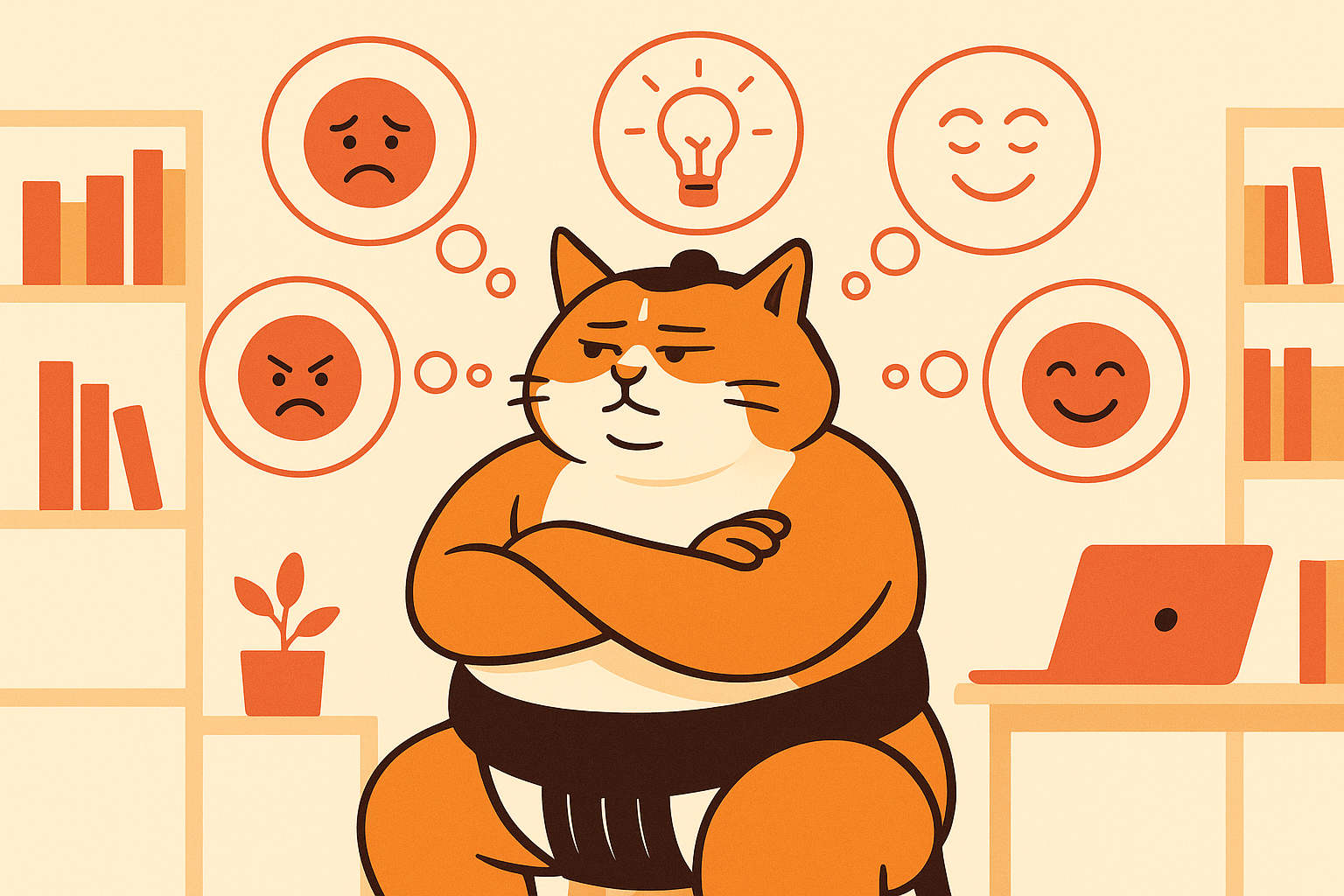
- Mental World Modeling is taking AI beyond just seeing and reacting to the physical world. Researchers are developing AI systems that incorporate hidden mental states--like what you believe or intend--into their predictions. Think of it like a detective who not only notices footprints at a crime scene but also pieces together the suspects' thoughts and motives. This could allow AI to better predict human behavior, leading to smarter assistants or more intuitive interfaces. Read more.
- As the cat, I must point out: the challenge lies in accurately modeling such complex mental states. Models can predict visible actions, but accurately guessing hidden intentions remains a significant hurdle. It's a step in an ambitious direction, but be cautious about the immediate impact.
📦 Also shipped
- OpenAI's latest Python SDK update comes with a new feature: content provenance checks, improving the transparency and verification of AI outputs. Essentially, it's like having receipts for AI content, so creators know where the information originated from. Check it out.
- Llama.cpp Update: The 'MTP support for Qwen3-Next' is an upgrade to enhance model flexibility and performance. Think of it as fine-tuning your car's engine for better fuel efficiency--this update fine-tunes AI models for more efficient responses. Read more.
🧠 One idea from the labs
Imagine teaching a robot to feel. The N_0-TWAM paper presents a model that integrates touch and vision, aiming to make robots better at handling tasks that require finesse, like sorting delicate fruits. This tactile understanding allows them to 'sense' the texture and pressure, much like a human would. Explore further.
💬 The big debate
Today, there's quite a bit of chatter about cognitive debt and using AI-generated code. The idea is that manually retyping code generated by AI can help programmers understand and own the code better, rather like handwriting your notes to memorize them. Some argue that it slows you down, while others believe it's a crucial step. The truth, I think, lies somewhere in balance--use AI for efficiency, but don't skip the learning moments that come from getting your hands dirty with the code. Join the discussion.
-- the cat
Get the next issue
Sharp insights from AI research. Every week. No fluff.